
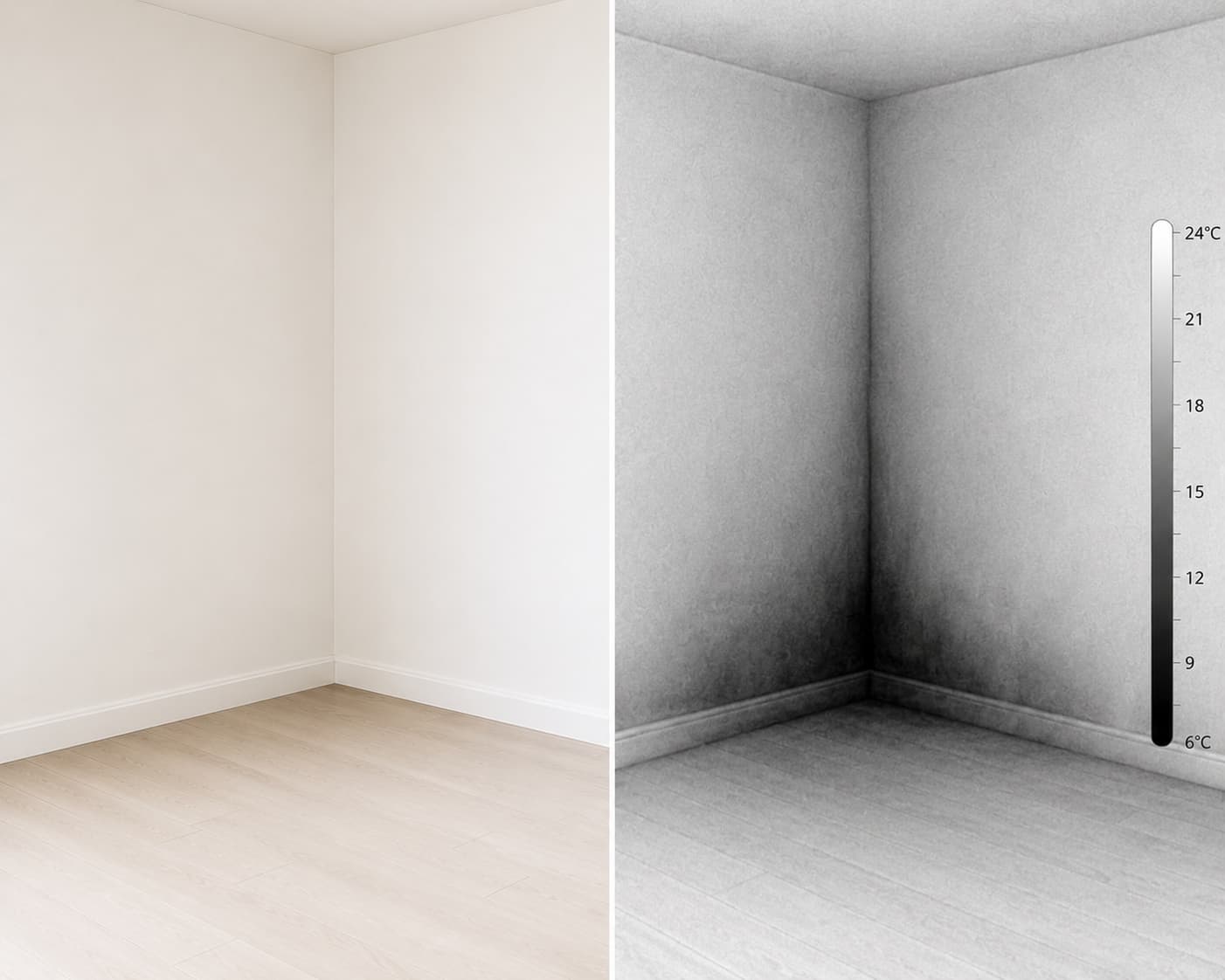
Mould starts with moisture, not black spots.
Damp beats visible spotting as a predictor of moderate to severe contamination. Sporetrust measures the moisture you can, and can't see.
Between scrubbing it yourself and a $20k tear-out, there's never been a professional middle. Sporetrust is the layer that should have been there — built for owners and tenants who want to manage moisture before it becomes major works.
Book a diagnosticYear-round monitoring, lab-backed reporting and a vetted remediation pathway only work if what's underneath is rigorous. We run the same four-layer protocol on every home — regardless of what the symptoms look like or who's reading the report.
See the full protocolThe mould inspection industry typically runs on remediation revenue — the company quoting the inspection often quotes the cleanup. Scope grows.
Sporetrust took the opposite position. Zero revenue from remediation, repair, fogging or treatment work. We charge for the diagnostic, deliver the evidence, and step back when the works begin. What's in the report is what we found — not what we're trying to sell next.

The international technical body for moisture, mould and water-damage work. Our diagnostic scope matches the IICRC S520 inspection standard — the same playbook used by accredited inspectors worldwide.
Air and surface samples go to an AIHA-accredited lab under ISO/IEC 17025 — spore counts and certificates in the format tribunals and insurers already accept.
Mould becomes a tussle. Landlords ask if tenants ventilated. Insurers ask if you maintained the home. Owners blame themselves for not catching it sooner. Nobody learns anything, the moisture keeps going, and the bill compounds.
Sporetrust steps in as the neutral party with one job — find what's there, document what caused it, and write down what comes next. The report reads the same whether you're a tenant, a landlord, an owner, a building manager or an insurer.
“Did you ventilate properly?”
We can help show if mould is structural, and who's responsible for returning your home to a liveable standard.
“Was this caused by lack of maintenance?”
We can help establish the cause and timeline of damage — defensible evidence for the insurance pathway.
“Did we do something wrong?”
Mould is a building defect, not a hygiene failure. We can help find the source of elevated spore count and prevent long-term damage to your home.
Damp beats visible spotting as a predictor of moderate to severe contamination. Sporetrust measures the moisture you can, and can't see.
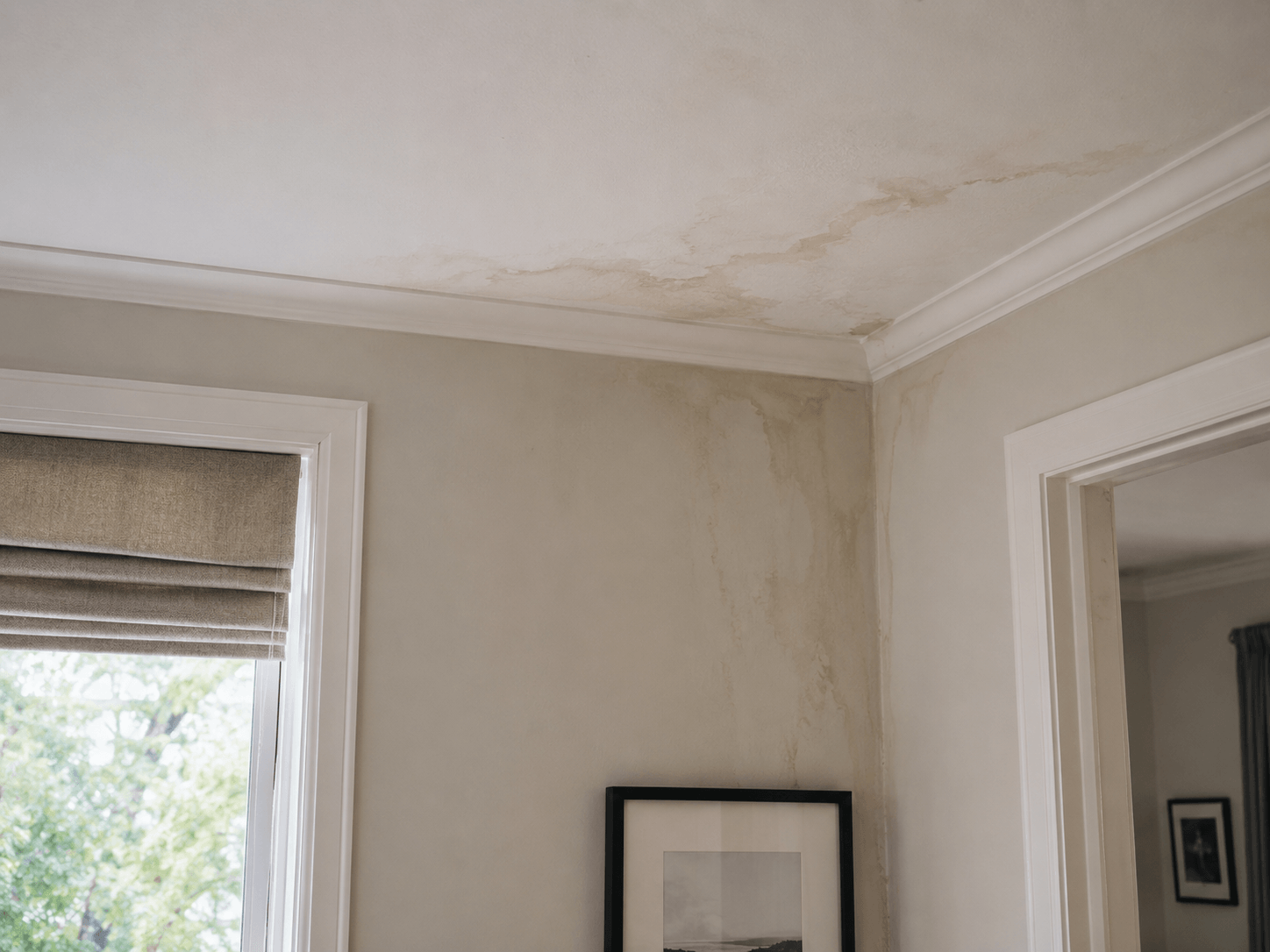
Most homes silently accumulate damp and moisture in wall cavities where mould grows unchecked. Minor pipe and roof leaks don't always cause a dripping ceiling — instead, your home absorbs damage like a sponge for months before it's detectable.
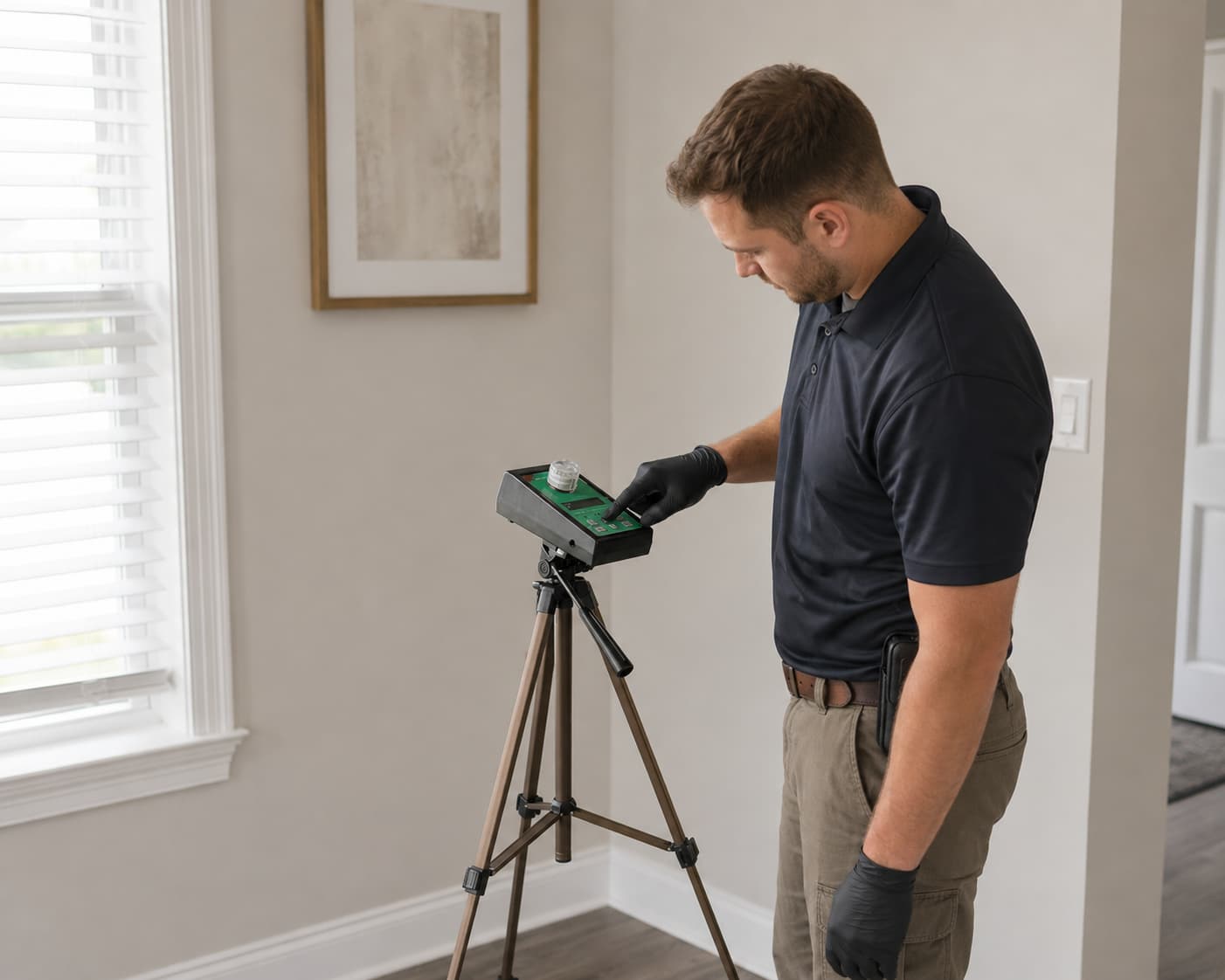
Mould exposure health risks aren't caused by bathroom spotting. Even spotless homes can show highly elevated spore counts. It's the mould we breathe in that becomes the real risk to your home and family.

Mould is 25× more likely to impact your home this year than termites or pests. We regularly check homes for mites and insects, while the most costly building defect goes unseen until it's too late.
Visible mould is the symptom. These are the failure modes underneath — what we actually look for, and what most inspections miss.
Pests happen to the house. Burst pipes happen to the house. Mould is a plumbing, waterproofing, or ventilation failure that hasn't surfaced yet. Not your guilty reminder.
Bleach clears what you see. On tile or grout, it works.
ButIf moisture's still feeding it, the patch returns within weeks.
Hot wash, vinegar soak and sun-drying do rescue spotted clothes, hopefully.
ButThe spores came from somewhere. Fresh laundry keeps spotting.
Cross-flow ventilation lowers indoor humidity. It's worth doing.
ButYou can't ventilate a wall cavity, or an AC compressor leaking behind the unit.
What you're seeing — or not seeing yet — determines the right diagnostic. Pick the pathway that matches your situation.
The questions people ask when they're deciding whether to use a diagnostic that doesn't sell the fix.
No. We inspect, document and report. If remediation or building work is needed, we can point you toward vetted providers with the right speciality, but we do not clip the ticket on the cleanup.